How Everyday Muslim Life Reflects Universal Human Nature
by admin ·
he Quiet Rhythm of Faith: How Everyday Muslim Life Reflects Universal Human Nature
In a world that rarely slows down, where notifications replace reflection and urgency overshadows meaning, the question of how to live a balanced life has become more pressing than ever. Across cultures, people search—sometimes restlessly—for a sense of peace, for discipline, for connection, for something that feels real beneath the surface of modern noise. What may come as a surprise to many is that, within the daily life of ordinary Muslims, there exists a quiet rhythm that responds to these very human needs—not as an abstract philosophy, but as a lived experience woven into the fabric of each day.
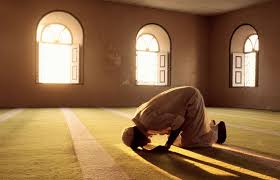
At first glance, the structure of a Muslim’s day may appear unfamiliar. Five daily prayers, moments of pause scattered across the hours, a deliberate interruption of routine. Yet, when looked at more closely, these moments begin to resemble something deeply universal. They are, in essence, intentional breaks from the relentless flow of time—opportunities to step back, to breathe, to re-center. In a culture where mindfulness and meditation apps have surged in popularity, the idea of pausing regularly to reconnect with oneself is no longer foreign. What is different, perhaps, is that within the Islamic tradition, this pause is not left to chance or mood; it is built into the rhythm of life itself. It transforms stillness from a luxury into a necessity.
This rhythm extends beyond moments of stillness into the realm of discipline, particularly in practices such as fasting. To abstain from food and drink for hours may, on the surface, seem like deprivation. But beneath that surface lies a powerful exercise in self-mastery. It is a conscious decision to say “no” to immediate desire in pursuit of a greater sense of awareness and control. Modern psychology often speaks of delayed gratification as a key predictor of success and well-being, yet here it appears not as a theory, but as a shared, communal experience practiced by millions. Hunger, in this context, is not merely endured; it becomes a teacher—reminding the individual of both their limitations and their strength.
Equally significant is the place of giving within this way of life. Acts of charity are not framed as occasional gestures of kindness, but as essential components of one’s relationship with the world. To give is not only to help another; it is to restore balance within oneself. There is a quiet recognition that human beings are not fulfilled by accumulation alone, and that compassion is not an abstract virtue, but a practiced habit. In societies where loneliness and disconnection are increasingly recognized as public health concerns, the idea that generosity can serve as a bridge between individuals carries profound relevance.
And then there is the dimension of belonging—perhaps one of the most deeply felt yet increasingly fragile aspects of modern life. Within many Muslim communities, the structure of daily living continues to emphasize family, continuity, and presence. Meals are shared, elders are respected, and relationships are maintained not out of obligation alone, but out of an understanding that identity itself is shaped through connection. This is not to suggest perfection, nor to ignore the challenges that exist, but rather to highlight an enduring emphasis on togetherness in a world that often celebrates independence at the cost of isolation.
What begins to emerge, when these elements are viewed together, is not a picture of rigid ritual, but of alignment with something deeply human. The need to pause, to discipline oneself, to care for others, to belong, to find meaning in repetition rather than constant novelty—these are not uniquely religious impulses. They are human ones. What the Islamic way of life offers, in this sense, is not a set of foreign impositions, but a structured response to needs that already exist within us.
Perhaps this is where much of the misunderstanding begins. When seen from the outside, practices can appear as restrictions, differences can feel like distance. But when approached with curiosity rather than assumption, a different image takes shape—one that is less about division and more about recognition. The rhythm of Muslim life, quiet as it may be, speaks a language that is not confined to any one culture. It is the language of balance in a world of excess, of meaning in a time of distraction, of connection in an age of fragmentation.
And in that sense, what may initially seem unfamiliar begins to feel, in a subtle but powerful way, like something we have always known.