Beyond the Stereotypes: The Empowered Role of Women in Islam
Beyond the Stereotypes: The Empowered Role of Women in Islam
When the topic of women in Islam arises in modern discourse, it is often filtered through a lens of misconceptions. The common narrative frequently focuses on what is “restricted” rather than what is “empowered.” However, if we examine the historical context and the core teachings of the faith, a radically different picture emerges—one of independence, legal rights, and profound respect.
A Historical Revolution of Rights
To understand the status of women in Islam, one must look at the world into which it was introduced in the 7th century. In many contemporary societies of that era, women were often viewed as property or lacked basic legal standing.
Islam arrived as a transformative force, granting women rights that would take centuries to be recognized in other parts of the world. From the right to own property and manage their own wealth to the right to inherit and the right to choose a spouse—Islam established a legal framework that treated the woman as an independent entity, not an extension of her father or husband. This was not merely a cultural shift; it was a fundamental recognition of the woman’s agency.
The Pursuit of Knowledge and Leadership
The history of Islam is replete with women who were not passive observers but active leaders. The most prominent example is Aisha, the wife of the Prophet Muhammad, who was a brilliant scholar, a political leader, and one of the most prolific transmitters of Islamic knowledge.
She stands as a testament to the Islamic encouragement of female education. Throughout the centuries, women have served as jurists, poets, philanthropists, and teachers. This legacy challenges the modern stereotype that suggests Islam prefers women to be silent or uneducated. On the contrary, the pursuit of knowledge is a duty incumbent upon every Muslim, regardless of gender.
Dignity Over Comparison
A common point of contention is the concept of gender roles. In Islamic thought, difference does not imply inequality. Rather, it acknowledges that men and women have distinct roles that are meant to be complementary rather than competitive.
In this framework, the woman is honored not by how well she mimics the role of a man, but by how she fulfills her own purpose. The maternal role is given the highest station—”Paradise lies at the feet of mothers”—which is a profound statement on the value placed on the nurturing, stabilizing force that women bring to the family and society. It is a celebration of the woman’s unique contribution to the fabric of civilization.
Defining Her Own Identity
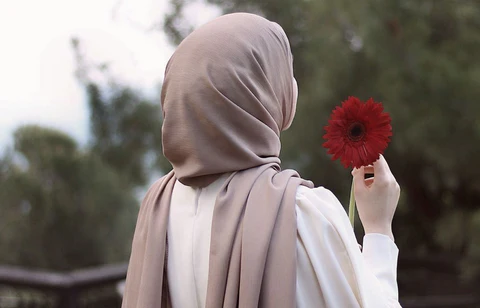
In modern times, many Muslim women are choosing to reclaim their narrative. They are doctors, engineers, activists, and thinkers who are balancing their faith with their professional and personal ambitions. For these women, the hijab and the teachings of Islam are not barriers; they are expressions of a conscious choice to prioritize their relationship with the Divine over the fleeting expectations of fashion and social pressure.
Ultimately, the goal of Islam is to ensure that the woman is treated with the dignity she deserves as a human being. When she is empowered, the entire society is empowered.